
AI as a Partner: Enhancing Human Potential Without Replacing It
AI is taking over routine work, and the companies that also cut the people who handle judgment are walking it back. Why the best use of AI is to offload everything around the relationship, and leave the relationship to people.

I have a love-hate relationship with AI.
I think AI is incredibly useful for running a business. I use it every day. I lean on models from OpenAI and Anthropic to talk ideas through, get the first pass of an email down, and write a lot of our code (an engineer still reviews every change). What I don’t like is the idea that it should replace people, and take the human side of doing business with them.
Right now there’s a lot of both going around. Startups raised a record $510 billion in the first half of 2026, and in the second quarter alone, AI companies took more than 70% of it. Large language models are useful in a lot of places, but plenty of companies still use them to cut people out of work that needs a person. This post is about the other approach: using AI to take work off people’s plates, and leaving people in the relationship.
The most relatable example is customer support. Whenever I get a bot on the phone or in a text, I immediately say, “Talk to a human.” I’m not alone: in a 2026 Gartner survey, 87% of customers said a company using AI for customer service must still give them a way to reach a person. Klarna learned this in public. In 2024 it announced that its AI assistant was doing the work of 700 agents. In 2025 its CEO admitted quality had dropped, and Klarna started hiring people again. Gartner now expects half of the companies that cut service staff because of AI to rehire by 2027.
Models have gotten much better at reasoning. In 2025, one scored at gold-medal level at the International Mathematical Olympiad. But they’re still uneven on problems that don’t look like the ones they learned from. Research from MIT found that performance drops on unfamiliar versions of familiar tasks, and Apple researchers found that changing only the numbers in a math problem, or adding one irrelevant sentence, can throw a model off. A customer conversation is exactly that kind of problem: every account is a little different, and judgment matters more than recall. That judgment is the part of the job I want a person doing.
The work around the conversation
When I started my first company, I tried to do every job at least once, including the cold calls and the onboardings. My rule was to never ask someone to do something I hadn’t done myself. The conversations were the good part. What piled up was everything around them: logging the call, updating the record, writing the follow-up, and rereading a long thread before the next meeting so I didn’t ask a customer something they’d already told us.
None of that needs me to be clever. It needs someone to remember and to type, and that’s the part models are good at. So that’s where I want AI: doing the recall and the typing, so the person has more time for the customer.
What that looks like in Custral
We built Custral around that split. Here’s what it looks like day to day.
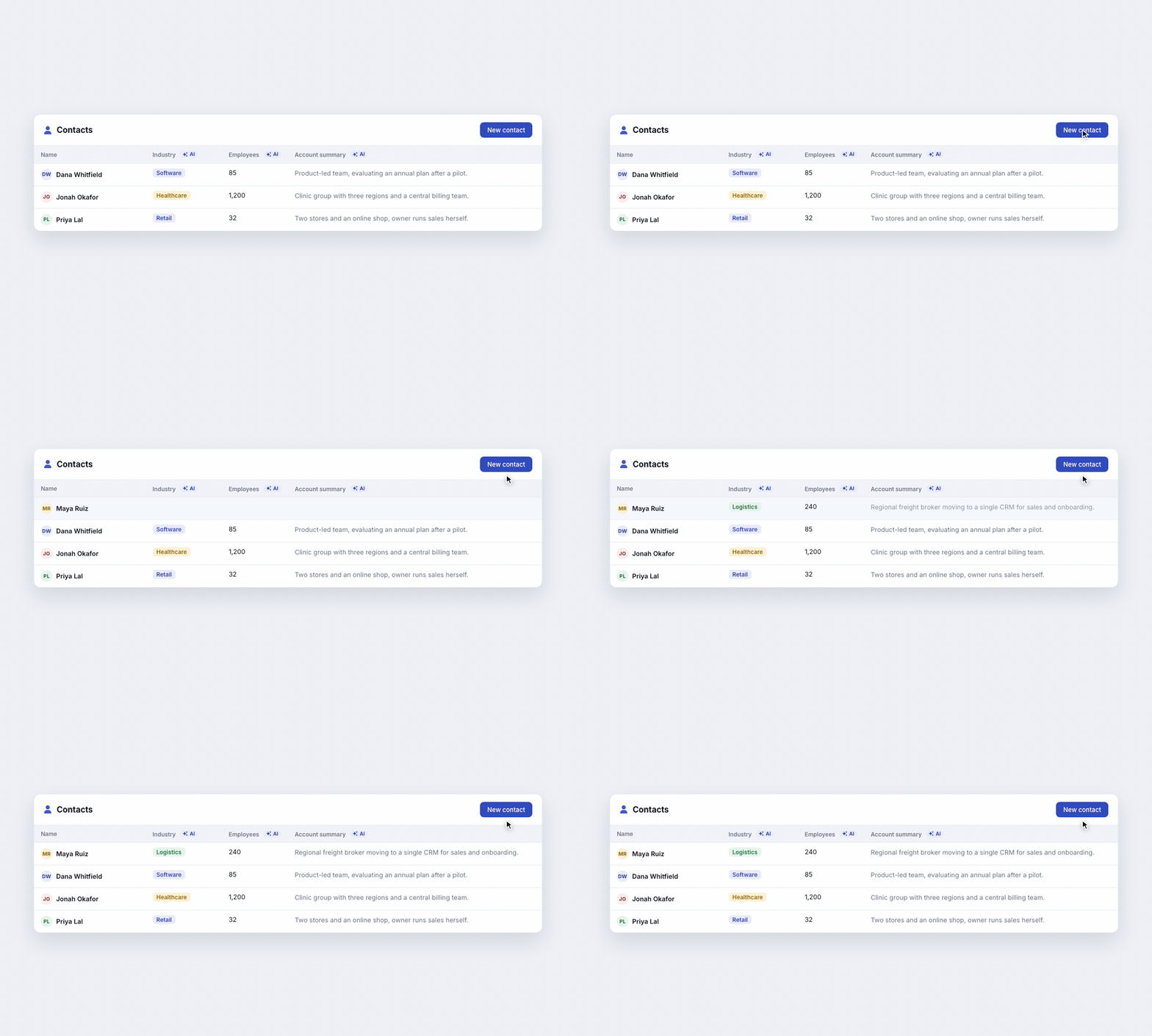
Records fill themselves. I’ve never met anyone who enjoys data entry (I certainly don’t). In Custral you can put a property agent on a field and have it fill that field in when a new record is created. It works on select, number and long-text fields, among others, so a new contact has them filled in a few moments after it’s created.
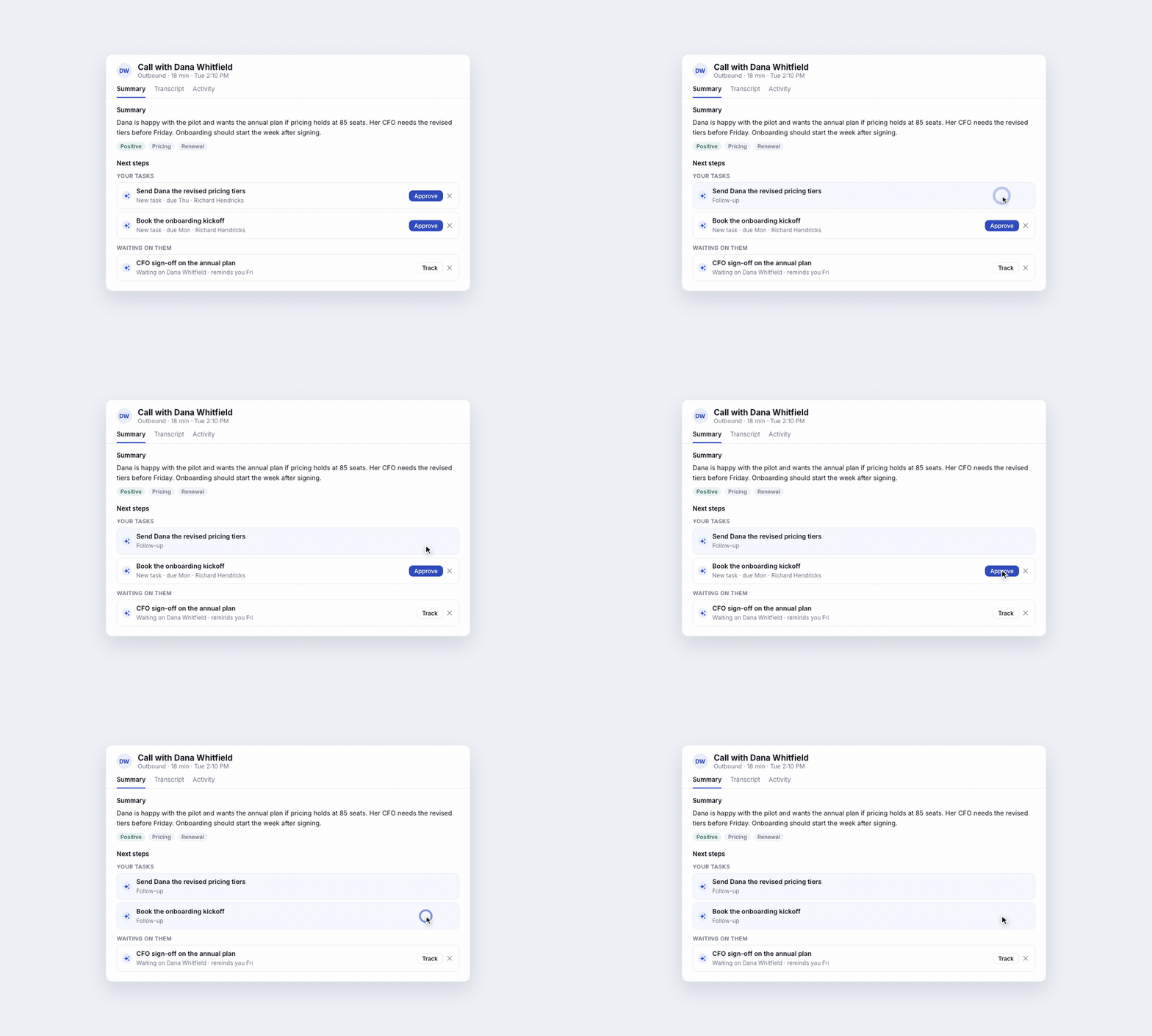
Calls come back summarized. When you call from the Custral dialer, or record a call with the desktop recorder, Custral transcribes and summarizes it for you. It also suggests follow-ups from what was said, and you decide which ones actually happen. You get to listen to the customer instead of taking notes, and the record still ends up with the notes.
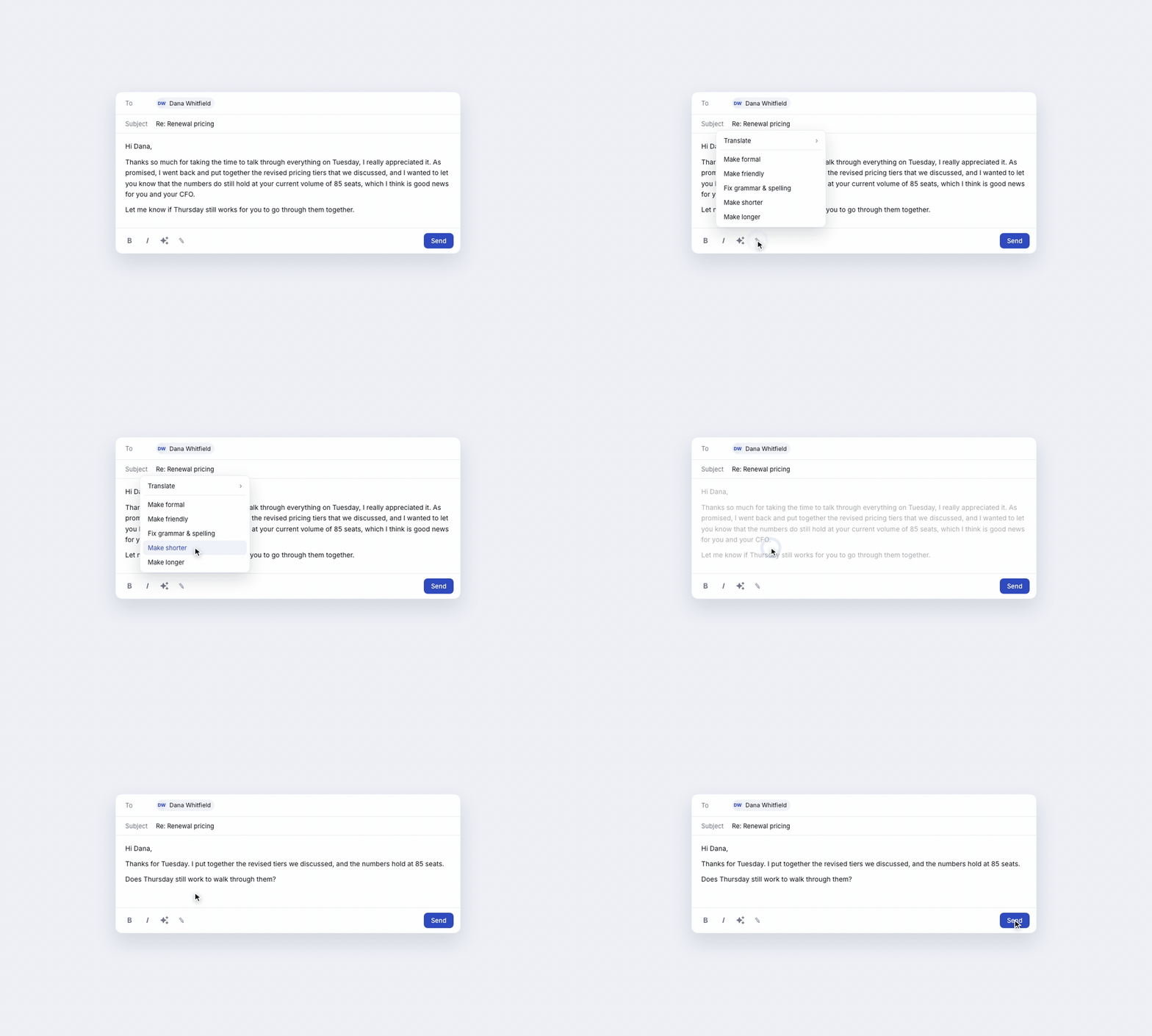
The first draft is already there. I draft emails with AI every day, so we put it right in the composer. It can write a reply from the thread, or rewrite what you’ve started: more formal, friendlier, shorter, longer, cleaned up for grammar, or translated. Whatever it writes lands in the editor, and you still read it, change it and hit send yourself.
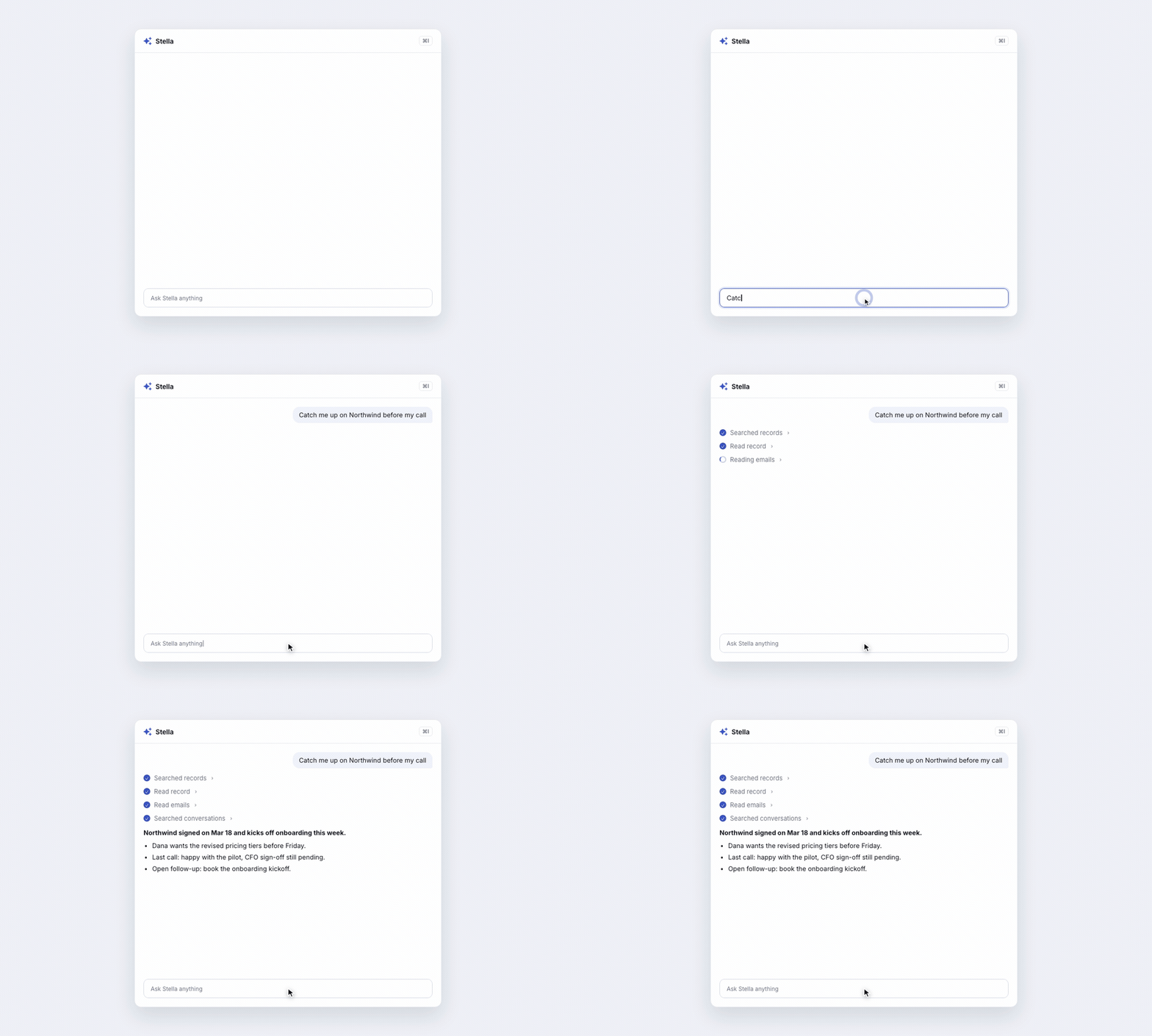
Catching up takes one question. Before a call, press ⌘I and ask Stella, your AI teammate, to catch you up on the account. Stella shows each step as it works, reading the record, the emails and past conversations, then gives you the summary. You walk into the call knowing what’s happened since the last one, and the customer doesn’t have to repeat themselves.
What asks first. I want to be straight about this part. By default, Stella asks before it sends anything. Property agents and conversation agents don’t ask; they just run. So point them at work you’re comfortable handing over, and keep the rest with a person.
Relationships are human
That’s the pattern I keep coming back to, in my own work and in what we build: AI does the volume, and people keep the judgment. It’s the love half of the relationship, without the hate. Relationships are human. Offload everything around them.
If that sounds like how you want your team to work, apply for access at custral.com. I’d love to hear what you’d hand off first.